
Available now on your servers
Every company log, signed and correlated
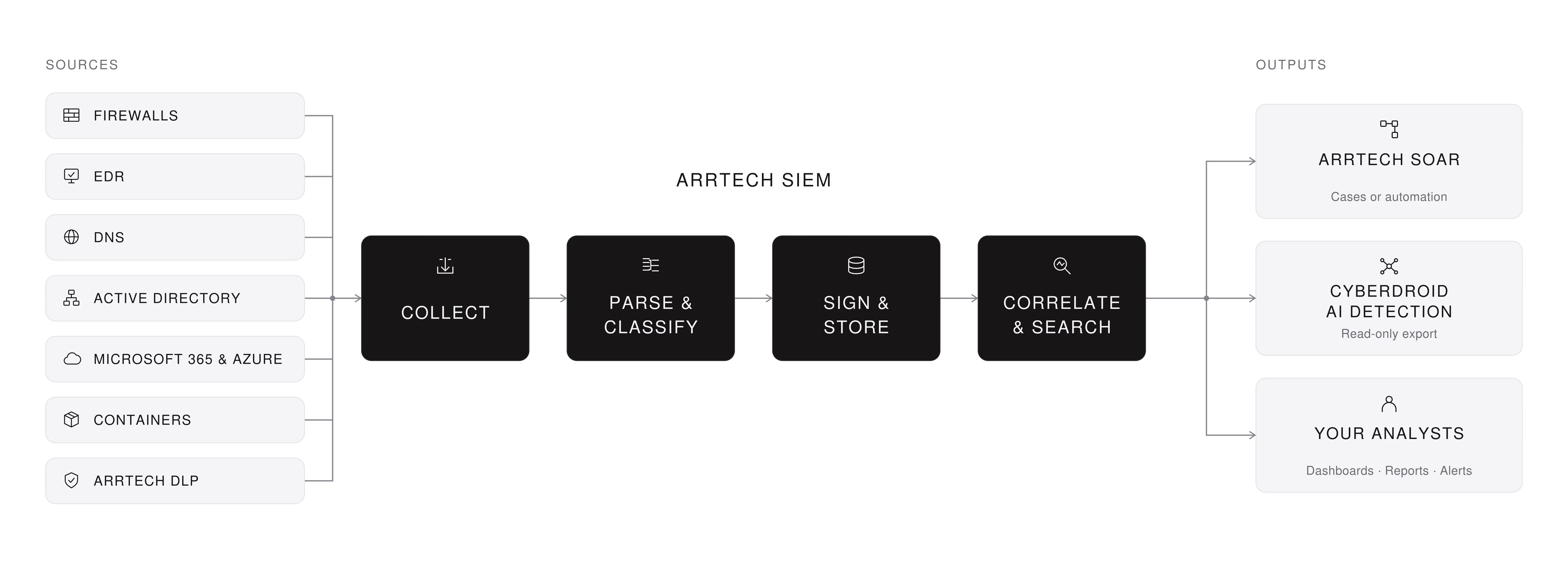
ARRTECH SIEM collects logs from any source, signs them so they hold as evidence, correlates them in memory and reconstructs incidents, all on servers you run. It is the foundation of the ARRTECH Security Suite: ARRTECH DLP feeds it events, ARRTECH SOAR acts on its alerts and Cyberdroid AI Detection reads its export.
How it works
ARRTECH SIEM classifies every event into a plain category and correlates events in memory across sources, so one rule covers every vendor. It hashes, signs and chains every write, so a log holds as evidence years later. Role-based rights decide who sees each source.
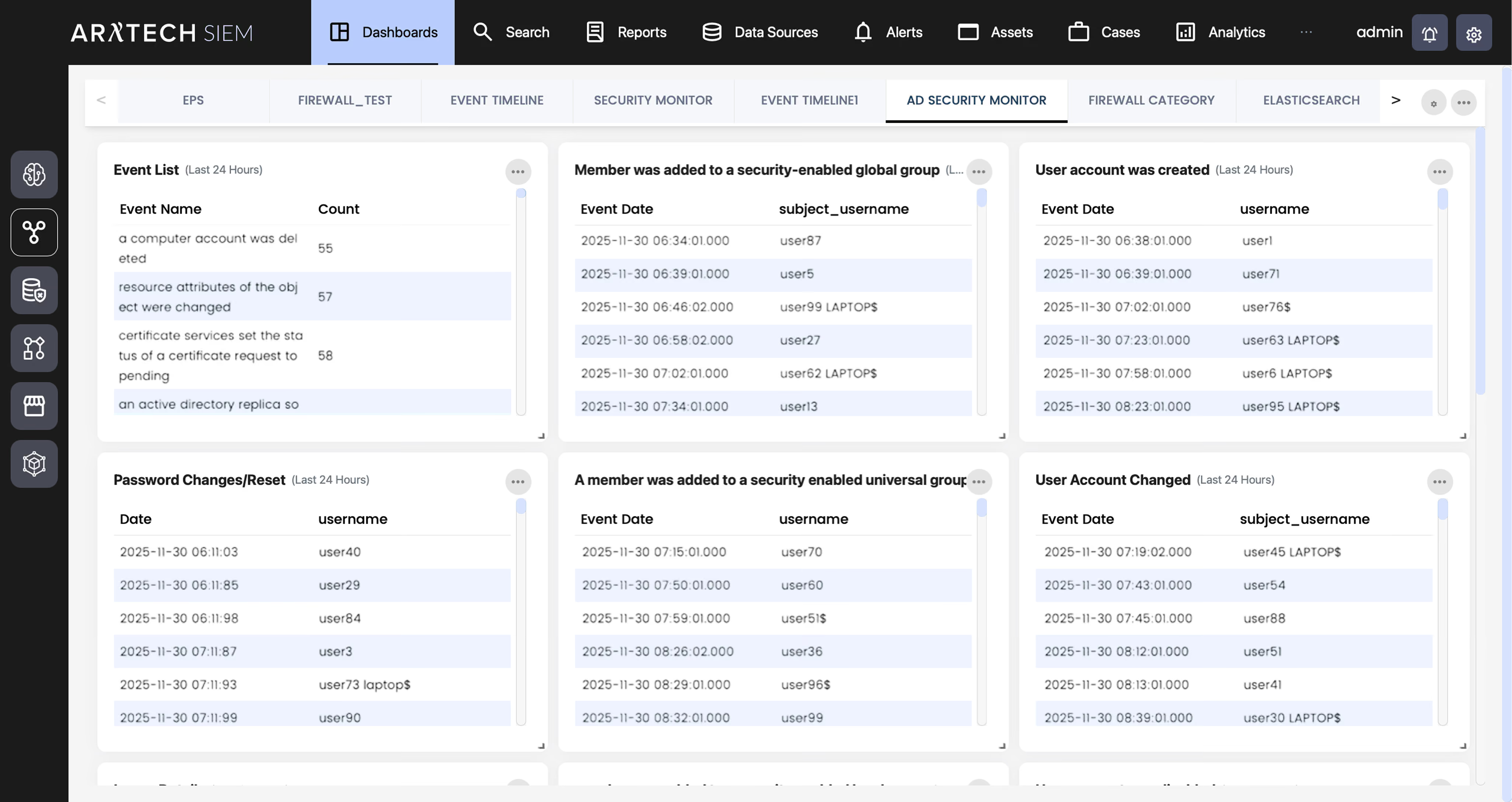
ARRTECH SIEM console: an Active Directory security dashboard, six saved queries over the last 24 hours.
 Advantages
A source you cannot collect is a blind spot. Logs arrive by agent, syslog, WMI, SQL, NetFlow, Microsoft 365, Azure and Windows Event Log, from firewalls and EDR to DNS and containers. Windows and Linux agents buffer while the server is unreachable and read remote systems without installing anything. Sources and agents are unlimited.
Every vendor writes logs its own way, and an unparsed log cannot be searched. Eight parser types, from regex and JSON to C#, Python and database query, chain so the next tries when one fails. A helper builds a parser from a sample log, and ARRTECH writes one for unsupported sources under support. Windows event 4624 becomes successful login.
A log that cannot be shown unaltered proves nothing to an auditor or a court. Every write is hashed and signed, each file chains to the last, and a qualified timestamp authority stamps the chain daily. Any source exports with its signatures, certificate and a standalone verifier, so a third party can check it years later. A report flags faulty files.
An attack crosses vendors, and a rule per vendor misses the join. Correlation runs in memory on classified events, so one rule spans every source. Rules run on a sliding window, chain queries, or match each row as it arrives, catching a count, an absence or a sequence. A limiter suppresses duplicates, and any alert can open a case in ARRTECH SOAR.
Search syntax is muscle memory, and relearning it is a cost of switching SIEM. A base search selects sources, filters and groups. A pipe | passes the results to functions that reduce, enrich with lookups and geolocation, compute statistics and combine related events. Saved queries feed dashboards, scheduled reports and alerts. Ready reports cover PCI DSS, HIPAA, GDPR, SOX, NIST and ISO/IEC.
An alert says something happened. Proof needs the whole sequence. An AI module runs machine learning, deep learning and graph neural network models on an in-memory graph to find multi-step attacks. UEBA scores each user and entity on a risk timeline. A forensic module reconstructs the sequence of events and maps every connection, allowed and blocked.
Limits
ARRTECH SIEM does not respond: it collects, correlates, alerts and opens cases. Response runs in ARRTECH SOAR, a separate product on the same console. A risk score ranks a user or entity for a person to review; it is not a verdict.
Requirements
ARRTECH SIEM runs on Debian, Ubuntu or Red Hat Linux, with processing, search, correlation, reporting and management as separate services that balance load, fail over and scale out. Licensing counts daily data volume or events per second, with unlimited sources and agents and no operating system or database licenses.
