Why trust a finding?
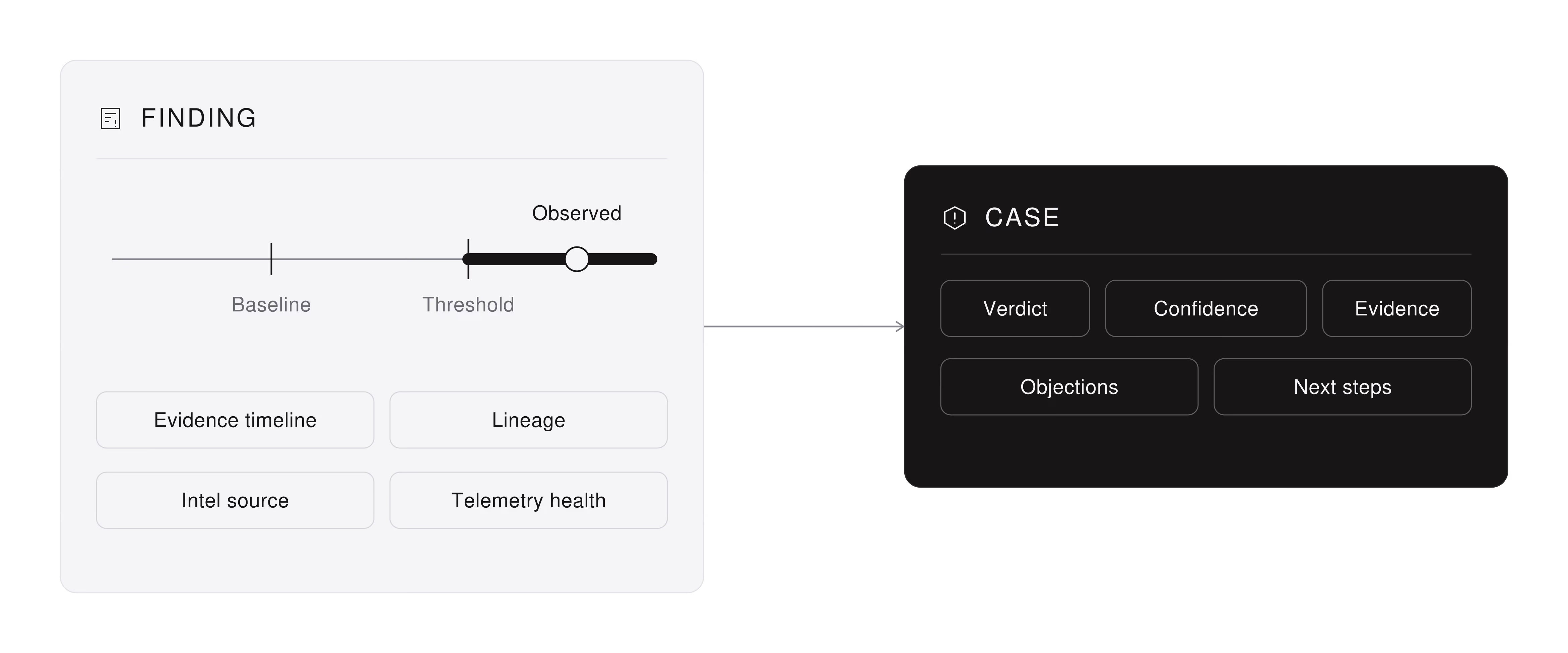
Because you can check it. Every Cyberdroid AI Detection finding and every Cyberdroid AI Investigation case carries the evidence behind it, and says when the telemetry was incomplete.
Controls
Blind spots shown.
Every output shows telemetry health. An empty query is never proof that nothing happened.
Intel has provenance.
Threat intelligence shows its source, its age and how far it is trusted.
Verdicts are challenged.
A separate critic step tests whether the evidence earns the conclusion.
Limits
Scores
A score ranks your queue and is never a verdict. A graph relationship does not prove intent.
Incomplete
When its budget runs out, AI Investigation parks the case incomplete instead of concluding.
Language
Reports, findings and verdicts are never machine-translated, so a verdict cannot change in translation.
Standards
Naming a clause is not a claim of certification.
NIST
AI RMF MAP 2.2 asks that knowledge limits are documented. Showing blind spots and challenging verdicts answer it.
EU
Article 14 of the EU AI Act asks that people can interpret output and stay aware of automation bias. Showing the threshold beside every score is our answer.
