Responsible deployment
How Cyberdroid AI detectors move from testing into production.
How models reach production
Evaluate models in stages on representative activity, and retain the reason for each production change. The team should remain able to inspect performance and withdraw a detector when needed.
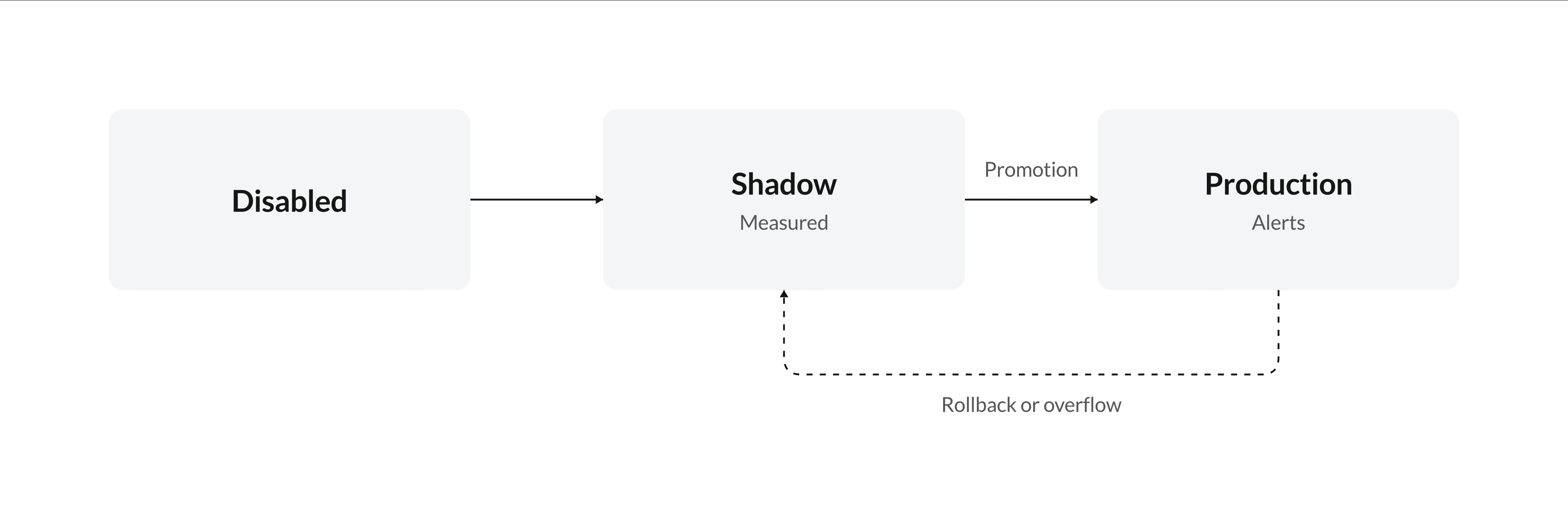
Stages
-
Three detector states
Each of the 21 detectors is disabled, in shadow or in production. Only production alerts.
-
Replay testing
Before promotion, replay shows how accurate, complete, steady and noisy a detector is.
-
Written criteria
Cyberdroid AI Investigation runs as an evaluation, with success and stop criteria agreed first.
Limits
Unseen activity
Evaluation reflects the data and cases tested. Continue reviewing source quality and new behavior, with rollback available when results warrant it.
Status
Cyberdroid AI Detection is available now to select organizations. Cyberdroid AI Investigation is in early access.
Standards
Naming a clause is not a claim of certification.
NIST
AI RMF MANAGE 2.4 asks for a way to disengage a system, and MANAGE 4.1 for post-deployment monitoring.
ISO
ISO/IEC 42001 Annex A area A.6 covers the AI system life cycle.
